

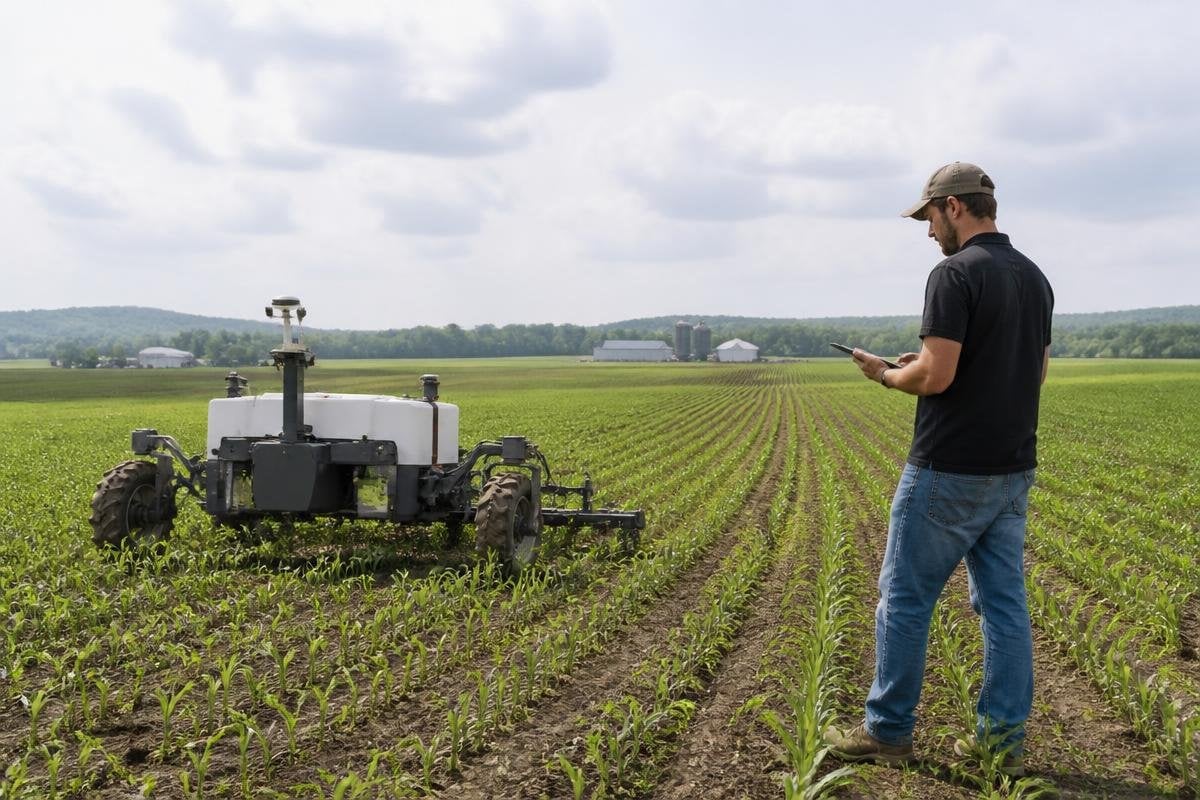
Precision agriculture connects field data with farm equipment so each part of a field can receive a more suitable treatment. Its future will depend on a simple test: can the system improve farm work under real field conditions without adding more work than it removes?
- Soil sensors should guide a clear action, such as changing irrigation or input rates
- Cameras and mapping tools need to produce records a farm team can check
- Autonomous equipment still needs safe limits, human oversight, and a recovery plan
What the system must do
A useful system starts with a decision. A sensor may measure soil moisture, a camera may inspect crop growth, and a positioning system may mark where a machine is working. Those readings matter when they change a task, such as where to water, spray, plant, or inspect.
The link between measurement and action needs to be easy to follow. A farm manager should be able to see which area produced the recommendation, when the reading was taken, and what the machine did next. Without that record, a map can look precise while giving little help during a busy workday.
Variable-rate equipment can change the amount of seed, water, or treatment applied across a field. The value comes from the control rule behind the change. If the rule uses old or poor-quality data, more machine control may only spread mistakes with greater accuracy.
Where autonomous machines help
Autonomous systems can handle repeated movement through known areas. A machine may follow planned paths, carry sensors, or return to a charging point after a task. The useful question is how the system behaves when the field changes from its plan.
Tall crops, mud, dust, slopes, loose ground, and blocked routes can affect movement and sensing. A safe machine needs a clear stop condition, a way to report faults, and a person who can take over. Those details matter more than a smooth demonstration on an empty test area.
Farm trials add the details a buyer can act on: the crop, ground, task, test time, and human help required. Robot24.com robotics coverage can connect those facts to machines tested or used in working fields, before the discussion turns to the limits that still matter.
The limits that still matter
Data quality remains a practical limit. Sensors need regular checks, cameras need usable light, and positioning systems can lose accuracy when signals are blocked. A farm also needs a plan for missing readings, damaged hardware, and weak network access.
Costs arrive beyond the machine itself. A deployment may need mounting hardware, software, staff training, data storage, repairs, and new work rules. The full cost should be compared with the task the system replaces or changes. A machine that saves field time may still be a poor fit if its setup consumes that saving.
The evidence gap matters too. A product claim about yield, water use, or labor savings needs a named site, a defined period, and a clear comparison. Without those details, the claim remains unproven. I’d wait for field records before paying for promises about farm-wide results.
A buying checklist
Use these checks before choosing a precision agriculture system:
- Name the task: Write down the work to improve and the result to measure.
- Check the data: Ask how sensors are tested, stored, updated, and replaced.
- Watch failure recovery: Find out what happens when the route, signal, or sensor reading fails.
- Count the people: Include setup, supervision, repairs, and daily data checks.
- Ask for field proof: Request a site, time period, baseline, and measured result.
- Plan the exit: Confirm how you can export farm records and remove the system.
That last check protects the farm when a supplier changes its software, stops supporting hardware, or cannot meet the promised service level. Data that cannot leave the platform can turn a useful tool into a long-term constraint.
The next stage of precision agriculture should be judged one task at a time. A system that cuts a measured field job, reports its limits, and keeps people in control has a case to prove; the rest still needs field evidence.