

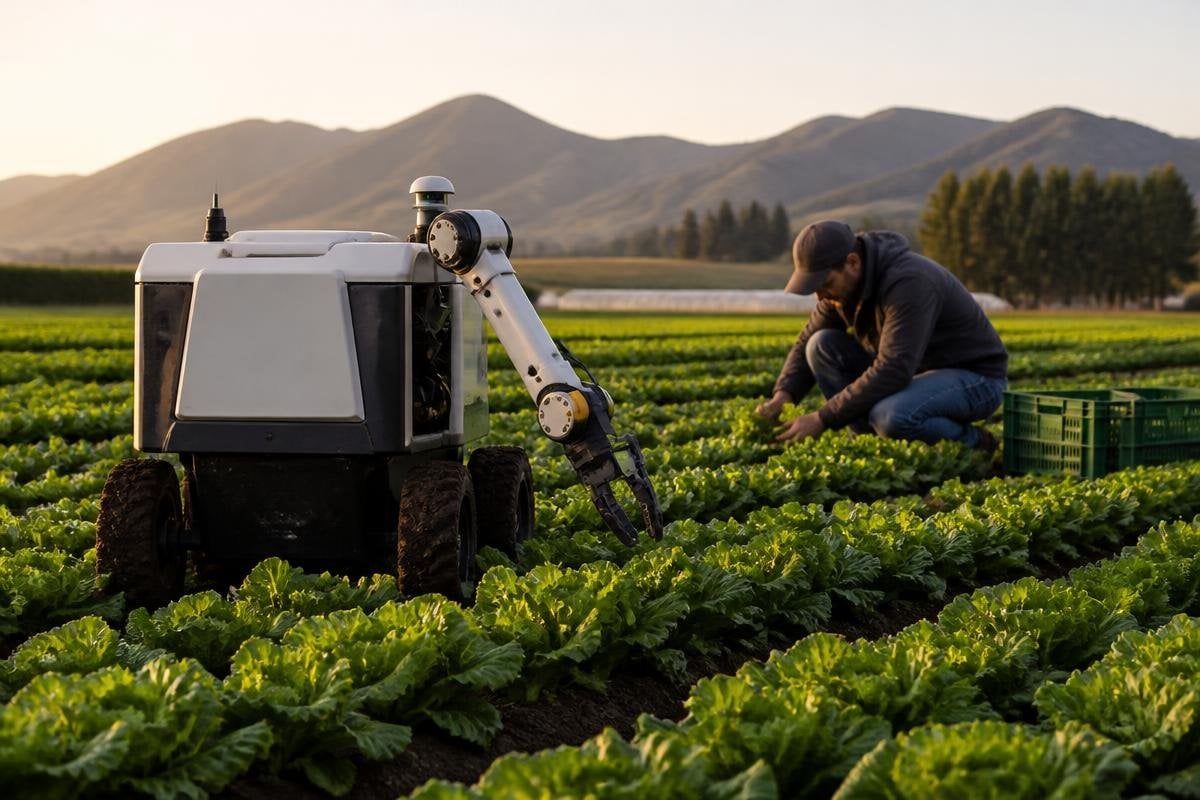
Food can be lost before it leaves the farm, during harvest, or after picking when quality drops. Farm robots may reduce some of that waste by finding ripe crops, handling produce with less damage, and giving growers better information about what is ready.
The hard part is proving that the robot prevents more waste than it adds through cost, slow work, missed crops, or damaged plants.
- Robots can spot crop conditions that people may miss during long work periods.
- Gentle handling could reduce bruising during picking and sorting.
- A useful trial must measure waste before and after the robot arrives.
Where waste starts on the farm
A crop can become waste when it is ready but stays in the field, when harvesting damages it, or when the farm picks produce at the wrong stage. The robot aimed at one of these losses has a clear job to measure.
A camera system can inspect color, size, or plant shape.
The robot arm can then pick selected produce, while a mobile platform can carry bins through the field. These tasks sound related, but each needs a different test because a robot that spots ripe fruit may still pick too slowly for a working farm.
Timing matters. A crop left in the field may lose quality, yet sending a robot too early can lead to immature produce. The useful question is how many kilograms reach saleable quality after the full harvest run.
How robots could reduce damage
Human pickers and machines can bruise produce through pressure, drops, or rough movement. A gripper with force sensing can measure contact and adjust its grip, while a robot route can reduce repeated carrying across uneven ground.
Those features do not prove lower waste by themselves. A farm would need to weigh damaged produce from robot-picked rows and compare it with matching rows picked by the usual method. The comparison should use the same crop, field conditions, packing rules, and time window.
Sorting can also affect waste. A vision system may separate produce by size or visible damage before packing, which can send different grades to different buyers. That helps when buyers accept more than one grade, but it does little if the market still rejects every item outside a narrow size range.
A waste figure means little unless the crop, sorting speed, damage rate, and final buyer are named. Robot 24 can connect a farm robot’s claim to those details and the measured result, which is the evidence needed before the limits decide how much food the system saves.
The limits that decide the result
Farm work changes from row to row. Leaves block cameras, dust covers sensors, wet soil affects wheels, and fruit can hide behind branches. A robot that works in a clean test plot may need slower movement and more human help in a dense field.
Labor can remain part of the system. People may need to guide the robot, remove produce it missed, refill bins, or check its decisions. Those hours belong in the waste calculation because a machine that reduces bruising while delaying harvest can shift the loss to another part of the farm.
Energy, repairs, and transport matter too. If a robot needs frequent service or cannot move between fields without a separate vehicle, the farm must count that work when it compares the new method with its current process.
There is also a market limit. A robot may pick more produce, yet the farm still loses it if storage, cooling, packing, or delivery cannot handle the extra volume. Waste reduction needs a working path from plant to buyer.
A practical check before a farm trial
A grower or farm manager can use this checklist before signing a robot contract:
- Name the loss: record where food is being lost and how the farm measures it.
- Set the comparison: use similar rows, crop areas, weather, and harvest dates.
- Count saleable weight: weigh what reaches packing, not only what the robot collects.
- Track human hours: include supervision, sorting, repairs, and manual rework.
- Check the buyer: confirm that the market accepts the grades the system creates.
- Set a stop point: pause the trial if damage, delay, or labor cost rises.
The trial should also record what the robot misses. A machine that picks cleanly but leaves a large share of ripe produce behind may reduce damage while increasing field loss.
What would count as proof
A useful result needs more than a video of a robot picking one item. It needs a measured comparison across a meaningful harvest period, with waste recorded at the field, packing, and buyer stages.
Without that record, the safest claim is conditional: farm robots can reduce food waste when they fix a known loss and fit the rest of the supply chain. I’d fund a trial only after the farm names the loss in kilograms and sets the comparison before the robot arrives.
The next number to watch is simple: saleable kilograms per hectare after the full harvest and packing process.