

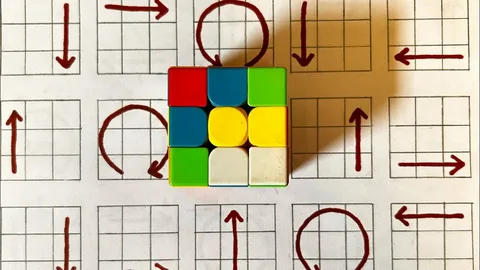
The Rubik’s Cube is more than just a colorful puzzle—it’s a test of patience, logic, and problem-solving skills. Whether you are a beginner or an advanced cuber, mastering the Rubik’s Cube requires a combination of strategy, practice, and understanding of different solving techniques. In this article, we will explore practical tips, tricks, and strategies to help cubers of all levels improve their solving skills.
Understanding the Basics
Before diving into advanced strategies, it’s essential to understand the basic structure of a Rubik’s Cube. The standard cube consists of six colored faces, each made up of nine smaller squares. The goal is to align each face so that all squares are the same color. Beginners should start by learning:
- Cube Notation: Understand the meaning of letters like R (Right), L (Left), U (Up), D (Down), F (Front), and B (Back) to follow algorithms effectively.
- Layer-by-Layer Solving: Start with solving one layer at a time, beginning with the white cross and gradually completing the first layer.
Mastering these basics lays the foundation for faster solving and advanced techniques.
Tips for Beginners
For those just starting their journey, here are some beginner-friendly tips:
- Practice Algorithms Slowly: Learn each step carefully before trying to solve the cube quickly.
- Focus on Patterns: Recognize common patterns that appear frequently during solving.
- Use Visual Memory: Try to remember moves visually, not just by counting turns.
Implementing these strategies will make the process smoother and build confidence in solving the Rubik’s Cube.
Intermediate Strategies
Once comfortable with the basics, cubers can move to more intermediate techniques:
- CFOP Method: Short for Cross, F2L (First Two Layers), OLL (Orientation of Last Layer), and PLL (Permutation of Last Layer), CFOP is a widely used speedcubing method.
- Finger Tricks: Improve efficiency by learning how to rotate layers using minimal hand movements.
- Practice Time Trials: Track your solving time to identify weak areas and improve them.
These intermediate strategies help reduce solving time and enhance overall cube mastery.
Advanced Tips and Tricks
For advanced cubers, mastering the Rubik’s Cube involves fine-tuning techniques and learning new algorithms:
- Algorithm Optimization: Memorize multiple algorithms for specific cases to improve speed.
- Lookahead Technique: Plan moves in advance while executing algorithms to reduce pauses.
- Lubrication and Cube Maintenance: A well-lubricated cube can drastically improve solving speed.
Advanced cubers often rely on a combination of practice, muscle memory, and strategy to achieve sub-30-second solves.
Final Thoughts
Mastering the Rubik’s Cube is a journey that combines patience, strategy, and problem-solving. From understanding the basics to learning advanced algorithms, cubers of all levels can benefit from structured practice and effective techniques. Whether you are solving casually or aiming for speedcubing records, the tips, tricks, and strategies outlined here can help you reach new heights in your Rubik’s Cube journey. By consistently applying these methods, anyone can achieve proficiency and enjoy the satisfaction of a fully solved cube.
